So you've decided to live off grid, and you have some land that you are confident that you can legally use to live on. What is the best kind of dwelling place to live in.
A building
It may sound obvious, but the absolute best kind of accommodation is something purpose-built. There are huge advantages in having a house or cabin, in terms of the space available, and the ability to heat, insulate and waterproof it. Of course if you are going to go to all the trouble of building a house, then you may end really be considering being on-grid!
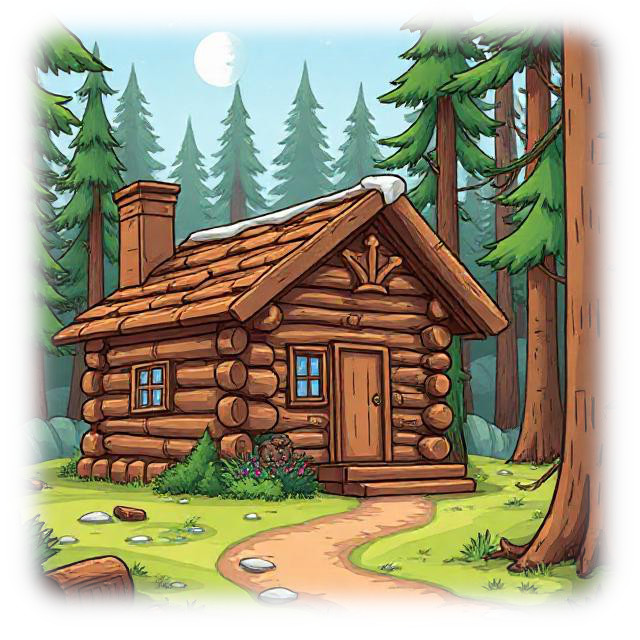
In many cases, however, building something new is not really an option. Either the cost is prohibitive it is not possible from because of planning permission. In many places you may be allowed to live on the land as long as the accommodation is considered temporary, or mobile. This basically means either a tent, or something with wheels.
Tents can be fun for holidays, but they are impractical for longer term living Even in the warmer months, overnight temperatures can drop and keeping a tent warm is not easy. We have cold-weather camped, using a woodburner in a tent, but keeping a fire in overnight is quite hard work.
Vehicles
Vehicles tick the mobile box nicely, and can be more or less suited to living in longer term. As mentioned previously, we started our off grid adventure living in a motorhome. It worked surprisingly well. Living in any kind of vehicle, there are always going to be compromises that you make. When choosing a motorhome the key thing to look at is the layout. What is best for you really depends on how you live, so you need to give it carefully thought.
For us, we needed a lot of daytime living space, so we opted for a layout which had a rear lounge that could be converted to a bed as needed, and an overcab bed. This gave a lot of flexibility in the living space. Some may find the need to assemble and take down the bed every day a bit too much of a chore. We were also fortunate to have lots of outdoor living space which can help with no feeling too cramped.
Having the motorhome as your only vehicle (which we did for several months) is not ideal, as it means everything needs to be packed away even for a short trip to the shops. Not to mention having to find places with big enough car-parks to take it when you do go shopping. If it is not your only vehicle, then there is the additional outlay of road tax, insurance, servicing etc to pay for and that can be
Other vehicles can also work. We've known people who have lived in converted buses, or large vans. They are a useful starting structure, but may not be as easy to live in as a dedicated motorhome.
Caravans
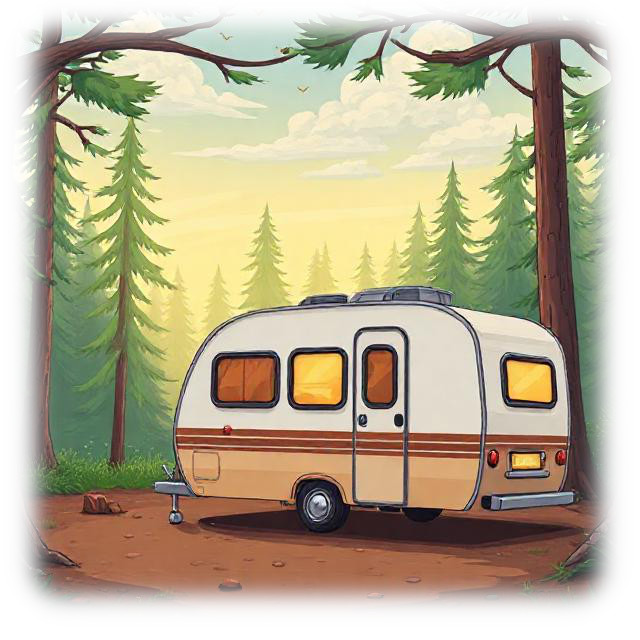
A large touring caravan will always beat a motorhome for living in because there is more space. Despite that most of what has been said about layout still applies. Static caravans are even better because they are much bigger, and despite the name the still count as a mobile ot temporary structure. At the top end, there are dual width statics which can be transported in two halves and assembled on site. These can be similar to a prefab bungalow but with the benefit of still being classed as mobile.
Boats
In many ways boat living is similar to caravan living. They share much of the same benefits and issues. The biggest difference with a boat is that you are on water with the added need to ensure the bottom is water-tight and you have mooring rights.
Issues
Nearly all of these types of accommodation share the same range of issues.
- Insulation; generally considerably less efficient than a conventional home due to flimsier construction and a larger ratio of exterior walls to volume. This makes it both harder to heat (and keep heated) in the winter, and harder to keep cool in the summer.
- Condensation. Poor insulation leads to more condensation, which in turn can lead to issues of damp and mould. If not kept under control damp is a caravan killer. Even large statics are not immune to this.
- Sound Insulation. If you live in a caravan you really know when it is raining outside, or windy. Also you hear more general environmental noise.
- Wear and tear. Interior construction of this kind of accommodation is generally more flimsy which means simple things like hinges, door catches and drawer mechanisms don't last as long
- Storage. Most caravans are design around provide the maximum amount of storage, but you will usually find yourself with less space than you would in a house, and some of it will be harder to access
- Depreciation. If you buy a house it will generally retain or gain value. Caravans and motorhomes don't. Generally caravans depreciate in value faster than motorhomes. We have heard stories of people who have been sold a static caravan as an investment. This is not a good idea. You may be able to make money letting one as an AirBnB, but the asset itself will lose value over time.
- Stability. In high winds both caravans and motorhomes rock. Motorhomes are more stable, because the weight of the engine gives them a lower center of gravity. It can be quite disconcerting. A high wind feels much worse inside a motorhome than it actually is.
- Space. One of the things you don't really realise until you live in small space is how much you move about. If someone is cooking in the centre kitchen, they can get quite frustrated with the number of times people need to squeeze past them.