For the last five years we have lived off-grid in a caravan in the woods. Since we started a lot of people have come up to visit. We've baked a lot of pizza in our pizza oven, and gone on a lot of walks with friends and home-ed families. We get a lot of comments on our lifestyle:
- You're so lucky
- You're living the dream
- Your kids have the best upbringing
- I wish we could do this
- I've always dreamed of doing something like this
That last one comes up a lot in a number of different forms. Most people have a dream. Very few people are living it.
What's your dream?
So what about you? What's your dream?
It's one of those questions which we often shrug off. I don't have a dream. My dream is not important. It's simply not possible.
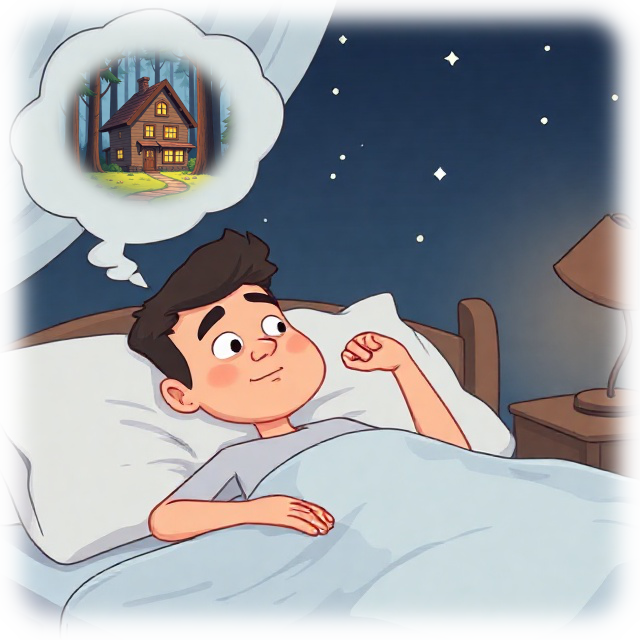
Life has a way of knocking the dreams out of us. We are brought up in a world where dreams are seen as frivolous. There are more important things. Education, responsibility, making a living, looking after our family. Don't get me wrong. All of these things are important. But what if the best way of looking after our family and the planet was not going down the conventional route? What if we could live our dream and flourish at the same time?
What is stopping you?
For many people what is stopping them is simply the grind of day-to-day living. We don't do the thing we want to do because we never stop to consider what it actually is. Sometimes we get a moment of clarity when we're on holiday, or we get a glimpse into a different way of living from a documentary or an encounter with strangers, but mostly we just plod along. Probably for many the first thing that is stopping us is time.
Insufficient Time
The only solution to this is to make time. You cannot say that you have none. We all have moments in the day that we waste. Whether it is doom-scrolling social media or vegging out in front of the television. Whatever your situation there is always a way of clawing out half an hour for yourself. It is too important to not do it. Even if it means staying up after everyone else has gone to bed, getting up early, or nipping out of the office to sit in the park for half an hour at lunchtime.
Having made the time, ask the question. What is my dream? Don't rush this. Treat it seriously. Be honest with yourself. Flesh it out.
For some it will be quite simple. It will be the one thing that you've always wanted to achieve. Your underlying passion. For many of us it started when we were young and it was knocked out of us by parents or teachers. “That's great, but when are you going to settle down? You'll never make a living doing that.”
For others the question might require a bit more effort to answer. Either you don't actually know, or you have confused what you want (a new house, a new car) with your passion is. In his book What's your dream? Simon Squibb addresses this point. His view is that “the things you own weigh you down”
“Even if you think a house, a car, or a swimming pool in your garden is your dream, I promise you it isn't. Chasing possessions will only get in the way of finding your real dream in life.”
Simon Squibb

Living the way we do was never my dream. It was a by-product of the process, not the dream itself. Our passion was to find the best life for our family and for the many others we work along side and help. Living the way we do was never our intention, it just came about as we pursued the other.
Having identified the dream, time continues to be an issue. I'd encourage you to put in a regular slot. Getting started is difficult - keeping going is harder. There are many other things to work through in order to pursue the dream, and all of them take time.
Fear of failure
I would argue that the second biggest obstacle to pursuing the dream is fear of failure. The dream seems so unachievable, the chances of failure so high, that many of us do not even start. The problem is, you will fail in 100% of the things you don't try. Even if we pursue the dream we may not make it - but if we never start it, we definitely won't. Often, working towards it makes things better. The journey is just as important as the destination.
One of the things I have noticed with our kids is how early fear of failure sets in. I hope it is not something we have instilled as parents, but it is definitely there. One of the biggest problems of the modern world is that society rewards results, not effort. A child spends hours on a drawing, and one of their friends says “it's not very good. I could do much better.” Objectively both may be true, but neither actually matter. After all it is not their drawing. No matter how good they are, there will always be someone better.
Criticism hurts, but there are two options with pain. The first is to avoid it, the second is to push through it. I can either agree with my critic and guarantee my failure, or I can decide to prove them wrong. If you don't practice you never improve. If we never pick up the violin because a musician we follow on instagram is more talented, we will never get better. The thirty-second instagram reel hides the thousands of hours of practice which the musician put in before they made it.
As a parent it is important to praise effort even if the results are uninspiring. As an adult, no-one is going to notice our effort, so we have to devise our own rewards.
The first thing to do is to identify what motivates you (and I don't mean clicks and likes). Are their rewards that you can give yourself which will spur you on to success. For many it is as simple as a to-do list that you can tick things off as you go. For others it might be deferred gratification of a cup of coffee, a bar of chocolate or a glass of wine. You will need to come up with your own methods, but keeping going is the only way to see long-term results.
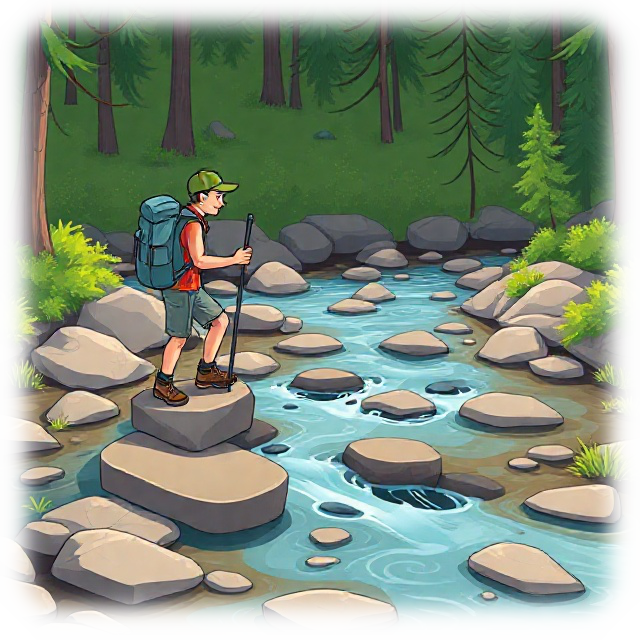
The second thing is to break the task down. There is no point going all in on something and losing everything on the first try. A huge failure may be hard to recover from. A series of smaller failures culminating in a small success is much easier to build on. I often quote the story of Winston Churchill's wall. Between 1925 and 1932 Churchill built a wall in his garden. Some days he was so busy he could only go and lay a single brick. When he started he didn't know what he was doing. By the end he had joined the bricklayer's union. There is a lot to be said for the long accumulation of small acts. If you set out to write a novel, you will be doing very well if you write 1,000 words a day, but if you keep it up (and take weekends off) you can complete a first draft in six months.
Most people overestimate what they can do in a year and underestimate what they can do in ten years
Bill Gates (apparently!)
There is a proverb which says that “if a job is worth doing, it's worth doing well”. I have often thought that if a job is really worth doing, it is worth doing badly. In other words, I am not going to let my lack of ability stop me attempting it. If I do it badly the first time, there is room for improvement on the second attempt.
The need to keep going
There are plenty of other things which stop us living the dream, but the last one I want to address is inertia. Conventional wisdom says that it takes two months to form a habit. Bad habits seem to require less time, particularly if they are addictive. Breaking a habit is much harder - as anyone who has tried to quit smoking or biting their nails will know.
What many people don't realise is that life itself is a habit. The modern world, increasingly is designed to lock us in. To encourage behaviours which make other people richer. Home ownership may be a freedom to many, but to mortgage brokers it is a living. The reason that banks want us to move away from cash is so that they can make a small cut on every transaction we pay out. Amazon is pushing us away from single purchases towards subscriptions. Some of life's habits are unavoidable. We need a roof over our heads, clothes on our backs and food on our plates. For most of us, however, we never stop to figure out why things are the way they are. We're so busy on the treadmill we don't stop to evaluate.
It may seem surprising, but our family was much happier living in a motorhome for a year than we were in a three bedroom house for the preceding five. It also cost less. I'm not saying that their weren't difficulties. Parts of it were very hard. But when we live more simply we learn to make space for the things we really enjoy not the things that the world sells us as enjoyment. Sometimes the only way to achieve the dream is to break the status quo.
Bringing it all together
So that leaves you with a handful of questions
- What is your dream?
- Are you prepared to make time to work towards it?
- How can you overcome your fears?
- And, what do you need to let go of to achieve it?